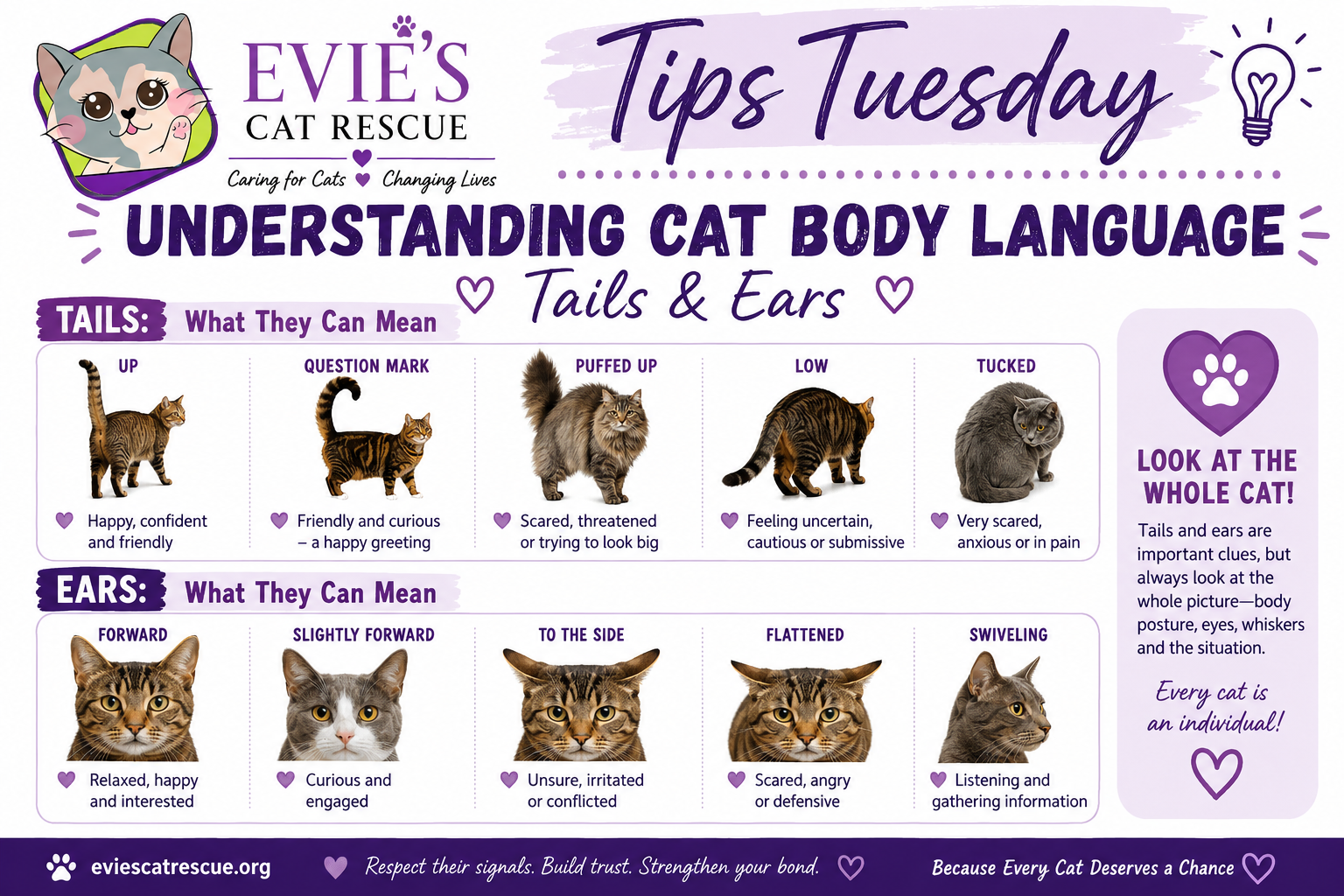
Tips Tuesday: Understanding Cat Body Language — Tails & Ears
Cats may not speak our language, but they are communicating with us all the time. 🐱❤️
Two of the easiest places to look for clues are a cat’s tail and ears. Learning to recognize these signals can help you understand when your cat is relaxed, curious, frightened, irritated—or simply asking for a little space.
🐾 What Is Your Cat’s Tail Telling You?
A cat’s tail can give you important clues about how they’re feeling.
⬆️ Tail Up
A tail held upright often indicates a cat who feels happy, confident and friendly. You may see this when your cat approaches you to say hello.
❓ Curved Like a Question Mark
A tail that is upright with a gentle curve at the top often belongs to a cat who is feeling friendly, curious and comfortable. They may be ready for some attention or playtime.
🐈 Puffed-Up Tail
When a cat suddenly makes their tail look much bigger, they are usually frightened or feeling threatened. Making themselves appear larger is a defensive response. Give them space and allow them to calm down.
⬇️ Tail Held Low
A low tail can indicate that a cat is feeling uncertain, cautious, anxious or uncomfortable. Pay attention to the rest of their body language before approaching.
🐾 Tail Tucked Close to the Body
A tightly tucked tail can be a sign of significant fear or anxiety and can sometimes accompany discomfort or pain. A cat displaying this posture should not be forced to interact.
〰️ Swishing or Flicking Tail
Unlike dogs, a rapidly moving cat tail doesn’t necessarily mean happiness! Swishing, thumping or flicking can signal irritation, overstimulation or excitement. If you’re petting your cat and that tail starts whipping back and forth, they may be telling you they’ve had enough.
👂 What Are Your Cat’s Ears Telling You?
A cat’s ears are incredibly expressive—and they can change position very quickly as a cat reacts to what’s happening around them.
⬆️ Forward and Upright
Forward-facing ears generally indicate a cat who is relaxed, interested and comfortable with their surroundings.
🐱 Slightly Forward
A curious or engaged cat may angle their ears toward whatever has caught their attention. They’re listening and gathering information.
↔️ Ears Turned to the Side
Sideways ears can indicate uncertainty, irritation or discomfort. Your cat may be deciding how they feel about what’s happening around them.
⬇️ Flattened Ears
Ears pressed flat against the head are an important warning signal. The cat may be frightened, angry or defensive. Don’t force interaction. Give the cat space and allow them to retreat.
🔄 Swiveling Ears
Cats can move their ears independently to locate sounds. Ears moving in different directions may simply mean your cat is closely monitoring their environment.
❤️ Look at the Whole Cat
One signal doesn’t tell the entire story.
A cat with a moving tail may be playful—or overstimulated. A cat with ears turned sideways may be nervous—or simply listening to something you can’t hear.
Look at the whole picture:
Tail
Ears
Eyes and pupils
Whiskers
Body posture
Vocalizations
What is happening around the cat
Most importantly, learn what is normal for your individual cat.
🐾 Respect What They’re Telling You
Understanding feline body language isn’t just interesting—it can help build trust.
When a cat tells us they’re uncomfortable and we respect that signal, they learn that they don’t have to escalate to hissing, swatting or biting to be heard.
Give nervous cats space. Let them approach when they’re ready. And remember that patience can make an enormous difference, especially for rescued cats who may still be learning that people are safe.
Respect their signals. Build trust. Strengthen your bond. ❤️
Because every cat deserves a chance.
Evie’s Cat Rescue
eviescatrescue.org